Paris, 25 July 2014
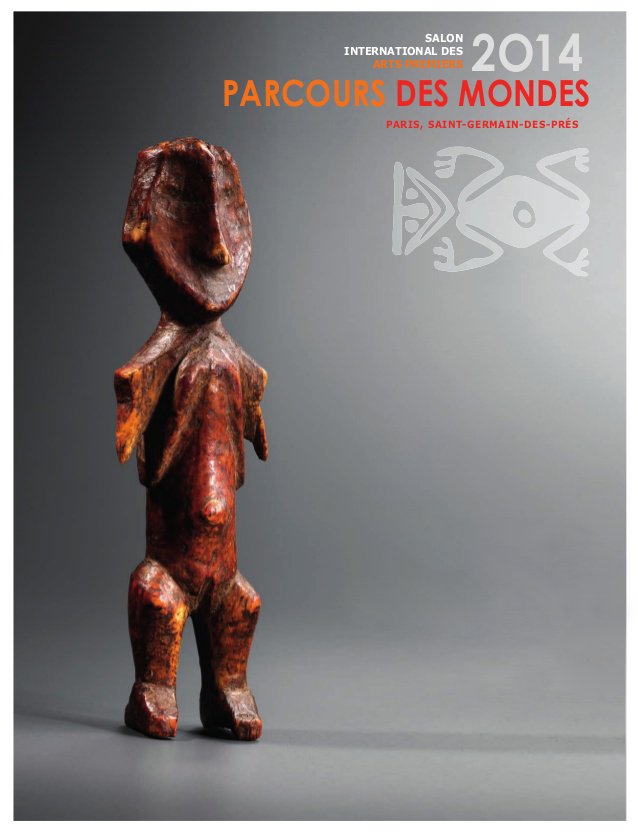
From 9 to 14 September 2014, “Parcours des mondes” is being held at Salon International des Arts Premiers (International Fair for Tribal Art). For its 13th edition, the Parisian fair, an unmissable highlight for fans of the genre, is to welcome 68 exhibitants. And while the name is French, guests are invited from the world over. Canadians, Belgians, Americans, Australians, English, Spanish, Italians, Dutch and Swiss are to meet Parisians in the heart of Beaux-Arts in the sixth arrondissement of Saint-Germain.
“Parcours des mondes” continues to be the most important international fair through it’s number of visitors, the quality of what is on offer and the diversity of its participants. This year, nine of the largest American art dealers are present: Thomas Murray, Jacaranda, Michael Hamson, Donald Ellis, amongst others. And while the first editions focused on African art, today it has diversified to include all North American art — recalling the image of the much-lauded exhibition “Indiens des plains” at Musée du Quai Branly — and Oceania, is becoming more and more researched by collectors. Thirty thematic and diverse exhibitions are presented: En avant la musique, Vers l’au-delà, Trilogie africaine, Les peintures aborigènes : l’abstraction et le sacré, ou encore Art de l’Inde, de l’Himalaya et de l’Asie du sud-est, and others, combining sculpture, music, jewellery, relics, paintings, photographs.
Each exhibition — and one of the features that make the show such a success — is very well documented, so that novices and professionals alike can understand and appreciate the works for their true value. The fair aims to be as accessible as possible to the public and establish a real bond between buyers and sellers. As the Honorary President, Antoine Frérot says, the art dealer is like “a smuggler; that is to say, a guide, an accomplice.”
The increased popularity of Tribal Arts was revived with the opening of the aforementioned exhibition at Musée du Quai Branly in 2006. Before this rediscovery, prices of Tribal Arts were more affordable and this renewed interest has had its consequences. “Prices have followed the curve of increasing interest and now the million threshold is regularly crossed and sometimes well beyond, “says Anthony JP Meyer, exhibitant at Indian Heritage.